Internal Arts Training
That Actually Changes Your Body
Build real internal strength, ease chronic tension, and deepen your understanding of Tai Chi and Qigong with step-by-step guidance from internal arts teacher Jim Russo.
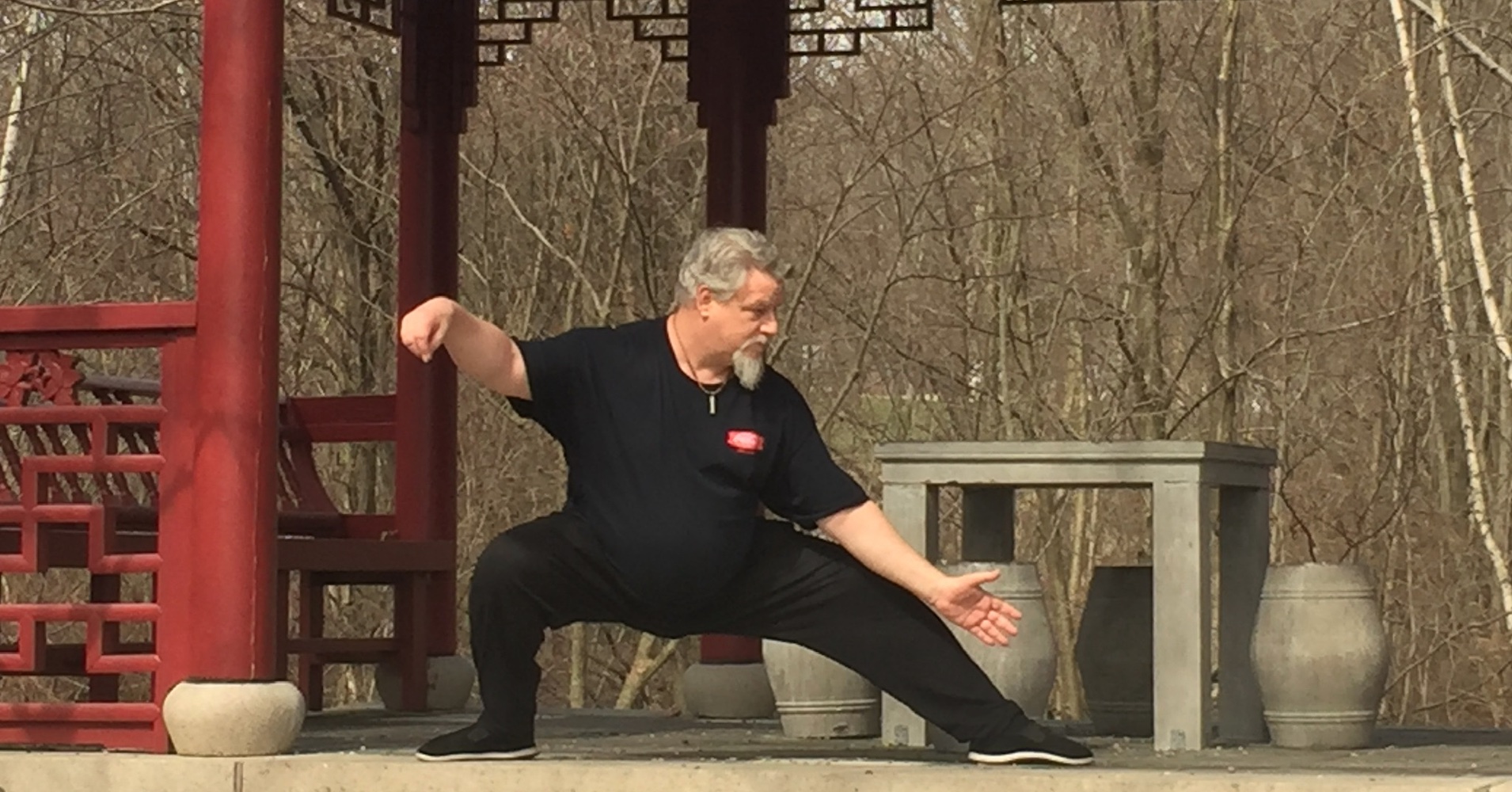
Students describe Jim’s teaching as clear, practical, and quietly life-changing — blending traditional depth, real-world experience, and modern delivery.
“These are the best Tai Chi applications instructional videos I have seen.”
— @dajosee
“An incredible course, unparalleled knowledge — worth every penny.”
— Brandon V.
“Easily the best internal tai chi instruction on you tube...”
— @yogavibe2516
New to the internal arts? Start here.
Enjoy this light introduction to Jim and some simple, seated exercises. No payment required, no commitment. Just real teaching you can feel.
Create a free account and start learning right away.
Most Internal Arts Students Feel Like Something Is Missing
Maybe this sounds familiar:
- You’ve learned forms, but still feel unsure how they actually work inside the body.
- You hear about “qi” and internal power, but no one can explain it in a way that makes sense in your own practice.
- You want the health benefits people talk about, yet your training feels scattered or purely external.
- You don’t have regular access to a teacher who can go beyond surface instruction and really help you feel the changes.
The Internal Arts Were Built for This
The classical arts of Tai Chi, Qigong, I Chuan, and Hsing Yi were designed as complete systems for organizing your body, breath, and mind so that everyday movement becomes easier, calmer, and more connected. With the right guidance, you can move beyond “just doing the motions” and begin to understand what these arts are truly capable of.
Who This Training Is For
Dedicated Practitioners
If you already practice Tai Chi, Qigong, or another internal art and sense there is “something more” inside the forms, this curriculum helps you find it — with precise explanations, drills, and applications.
Beginners & Returning Students
If you’re new, out of practice, or rebuilding your health, you’ll find gentle, well-structured lessons that meet you where you are and help you move safely.
Teachers & Therapists
Many instructors, bodyworkers, and health professionals study with Jim to deepen their understanding of structure, release, and internal organization — and then share those insights with their own students and clients.
Anyone Seeking Sustainable Change
This isn’t a 30-day challenge. It’s a living system that can support you for years — helping you move, breathe, and live with more ease, stability, and quiet strength.
Meet Your Teacher: Jim Russo
Jim is the founder of Zhong Ding Tai Chi Chuan and a lifelong practitioner of the internal arts. Over the past 50 years he has studied, researched, taught, and refined methods from Tai Chi Chuan, Hsing Yi Chuan, I Chuan, Qigong, Tai Chi Ruler, and related systems — always asking:
“How can these arts actually help people live with more comfort, clarity, and strength?”
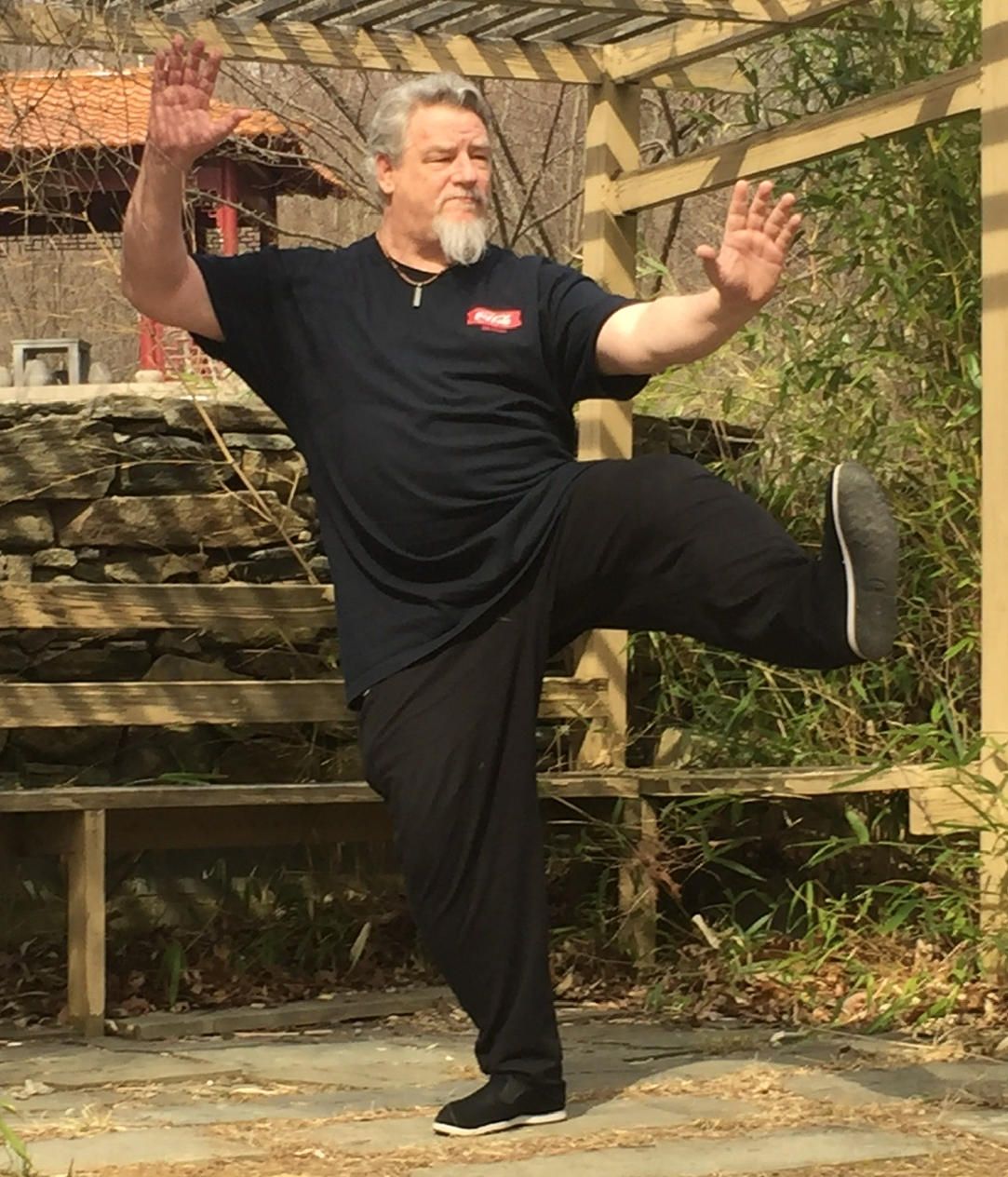
His teachers include legendary masters such as William C.C. Chen, Tao Ping-Siang, and especially B.P. Chan — whose encyclopedic knowledge of Tai Chi, Xing Yi, I Chuan, Qigong, dao yin, and traditional medicine continues to live through Jim’s work. His mission is to keep these arts alive and practical in the modern world.
“Jim is a scholar-warrior of the highest order. There are few with more skill, and still fewer with more humility.”
— Sean G.
A Life’s Work in the Internal Arts
Jim’s journey into the internal arts began with a simple realization: these practices are not just about fighting — they are about the “Big Fight” of living and dying in comfort. Over decades of training and teaching, he has used traditional Taoist and Shaolin methods to help friends, family, and students facing everything from everyday stress to serious illness. Along the way, he has refined, tested, and integrated teachings from multiple systems into a clear, practical approach.
He has worked with people who were told they had no chance of survival and others struggling with chronic conditions, always using the same tools: alignment, breath, intention, and patient repetition. The results have reinforced his belief that these arts are most powerful when they are shared openly and taught in full context — health, martial, and spiritual aspects all working together.
“The real deal. Mr. Chan is smiling.”
— Mike Trombetta
A Principles-Based Approach to Internal Arts
Whether practicing qigong or dao yin, the internal path always begins with the same foundations: regulate the body, regulate the breath, regulate the mind, and regulate the spirit. These are not abstract ideas — they’re practical tools that reshape posture, restore alignment, and help the body move with less effort and greater awareness.
Regulate the Body
Posture, alignment, and structure are refined so the bones, joints, muscles, and fascia work together instead of fighting each other.
Regulate the Breath
The type, cadence, and direction of breath are trained to support relaxation, circulation, and internal connection.
Regulate Mind & Spirit
Attention becomes steady, clear, and quietly engaged. Over time, this changes how you respond to stress, conflict, and everyday life.
Traditional qigong also invites us to look at the body from multiple perspectives: bones, organs, sinews, muscles, exterior and interior. As these layers begin to harmonize, energy flows more freely and the body becomes more balanced. Jim’s teaching connects these classical principles to modern experience in a way that feels both ancient and immediately useful.
A Simple Practice You Can Try Right Now
Here is a small taste of the kind of work you’ll find in the membership. Take a moment to stand up, if you are able.
1. Find Your Base. Stand with your feet about shoulder-width apart. Let your knees soften slightly. Feel your weight spread across the soles of your feet — front to back, side to side — until it feels evenly distributed.
2. Align Your Structure. Let your tailbone gently drop without tucking aggressively. Imagine the crown of your head lightly elongating upward. Your spine lengthens between these two points, like a string being gently drawn from both ends.
3. Breathe Naturally. Breathe in through the nose and out through the nose or mouth, whichever is more comfortable. Don’t force deep breaths. Simply notice how the breath moves your body — the rib cage, the belly, the back.
4. Soften the Tissues. With each exhale, allow a little more weight to settle through the legs into the feet. The bones carry you while the muscles quietly release any unnecessary tension. Notice how this changes the quality of your standing.
This is a tiny glimpse of how the internal arts organize posture, breath, and mind. In the Zhong Ding Healing Arts membership, you’ll explore these principles in standing work, forms, qigong sets, walking practices, and more — with clear guidance at every step.
Seeing Practice Through the Lens of Yin and Yang
The classic Taiji symbol — yin and yang — represents one of the deepest truths in internal practice: everything contains its opposite, and power arises from their balanced interaction. The head rises while the body sinks. Awareness lifts as the tissues relax. Structure becomes light above and full below. When these twin forces are present together, movement becomes both stable and effortless.
Even within a single posture, dozens of yin-yang relationships are present. In Xing Yi’s San Ti Shi, the arm stretches forward and back simultaneously; the crown rises while the pelvis sinks; the spine lengthens as the tissues release. These are not competing instructions — they are complementary forces that give the body spring and life.
“Jim single-handedly made me obsessed with internal martial arts from day one. A simple demonstration on intent and its effect on the body was a Matrix-style 'Whoa' moment for me.”
— Brandon V.
In more advanced work, fire (yang) naturally rises and water (yin) naturally descends. Guiding these tendencies in specific ways — for example, letting warm, active energy settle downward while calm, cooling energy rises — creates internal balance and buoyancy. These classical ideas become practical through clear, repeatable training, not vague mysticism.
Preparing the Vessel, Transforming the Inside
In the internal arts, waigong (external work) prepares the body so neigong (internal work) can transform it. Stretching tissues, opening joints, aligning the bones, and balancing muscular relationships create space for qi and blood to move freely. Much like stretching a balloon before inflating it, the body must be opened before internal pressure can build safely.
Exercises such as the Eight Brocades are often misunderstood as simple stretches. In reality, the orientation of the palms, the direction of intention, and the rhythm of breath all influence the internal pathways of qi. Downward-facing palms guide qi downward; upward-facing palms draw it upward; inward and outward orientations redirect its flow. Even basic movements have profound effects when taught with these details.
“Jim teaches the true internal aspects of the arts. Even the simple things suddenly make sense — and start working.”
— Aaron T.
Neigong then uses attention and sequential release to mobilize qi without forcing it. Rather than pushing or squeezing, Jim emphasizes allowing tension to dissolve in a specific order so internal pressure naturally fills the body. This method is both safer and more effective, and it avoids many of the risks associated with overly aggressive approaches.
As the vessel becomes full, energy can nourish the organs, soften the sinews and fascia, and support a more resilient nervous system. Stillness, patience, and precise training reveal deeper layers of understanding. Rushing only causes you to miss the low-hanging fruit.
What Students Often Notice as They Train
More Stability & Ease
Improved posture, smoother transitions, and better balance — whether you’re practicing forms, walking through your day, or simply getting up from a chair.
Deeper Calm & Resilience
Gentle movement, breath awareness, and clear internal reference points help settle the nervous system and reduce stress.
Clearer Internal Maps
Instead of vague concepts, you gain concrete cues for how to align, release, and organize your body — tools you can return to for the rest of your life.
“I'm finding these videos so helpful. They are superb bite-sized insights to practise, experiment with and incorporate into daily practice.”
— Mark D.
How Your Practice Can Evolve
Getting Started
Begin with the core path — gentle release work, simple standing, shaking, and foundation qigong. You learn how to get into posture without strain and how to breathe in ways that support your structure.
Building Your Foundation
Refine core sets like the I Chuan health practices and the Eight Brocades, start to feel clearer internal organization, and explore additional training paths as your practice deepens.
Deepening Your Practice
Forms, dao yin, walking sets, and more advanced neigong become part of a single integrated practice. You revisit earlier material with new understanding and continue to discover depth in “basic” exercises.
Inside the Zhong Ding Healing Arts Curriculum
The membership is organized into curated training paths. Start with the core path and branch out as your practice grows. Here’s an overview of what’s inside.
The Core Path
• Shuai Shou and shaking practices for release and circulation
• Standing alignment and getting into posture without strain
• Open & Close Dantian, sinking and floating between heaven and earth
• I Chuan Health Set postures for whole-body integration
• Introduction to the Eight Brocades with real internal detail
• Short follow-along sessions to help you build consistency
Ongoing Curriculum
Qigong Forms
Multiple sequences taught in depth, with variations and internal pointers.
Tai Chi Forms
Structure, transitions, and internal intention — plus applications that clarify why the form is built as it is.
I Chuan & Hsing Yi
Standing practice, health sets, and martial mechanics that build clean, integrated power.
Breath & Meditation
Breathing sets, seated practices, and quiet work to support the nervous system.
Applications & Partner Ideas
How to let internal principles show up in contact, without sacrificing health for power.
Warmups, Massage, & Longevity Work
Traditional exercises for keeping the joints, sinews, and organs comfortable over the long term.
How the Online Training Works
On-Demand Library
Stream lessons from any modern device. Rewatch key drills as often as you like and progress at your own pace.
Short, Focused Lessons
Most videos are just a few minutes long, making it easy to slip practice into a busy day while still going deep over time.
Modern Platform
Train on a modern platform with curated training paths, lesson progress tracking, and new material added regularly.
“Clear-cut, cumulative, step-by-step teaching. I recommend this course to anyone serious about internal arts and health.”
— Brandon V.
Stories from the Path
The Martial Artist Who Found Missing Pieces
One student came from years of grappling and striking arts, already comfortable with contact and intensity. What he felt with Jim was different: subtle but undeniable changes in power, structure, and effortlessness. A single lesson on how a Tai Chi posture related to an arm-drag changed how he moved on the mat — and how his partners felt his power.
“Jim is one of the most talented martial artists I’ve ever met. He turned small details into big breakthroughs.”
— James M.
The Peer Author Who Saw a Decade of Teaching in Two Minutes
An accomplished author and instructor in the internal-arts world watched a single short Jim Russo video — “The Formula for Effortless Power” — and posted publicly that what he had just seen explained in two minutes is what many teachers fail to convey in a decade.
“If you truly understand something, you can explain it simply. Brilliant example right here. Some teachers cannot explain in a decade what he here did in 2 minutes.”
— Jonathan Bluestein, author
The Long-Time Practitioner Seeking Depth
Some students arrive after decades in the arts, feeling that something essential is still missing. Jim’s integrated approach to qigong, form, and dao yin often provides language and methods that bring their previous training into sharper focus.
“Jim opened my eyes to a higher level that I can’t put into words. He’s teaching the same way I was taught — but with more compassion and clarity.”
— Timothy S.
The Online Student Who Still Felt the Connection
Even students who have only trained with Jim online consistently report that his explanations, demonstrations, and corrections reach them in a way that feels personal and real, despite the distance.
“I have only interacted with Jim online and cherish his knowledge, demonstrated skill, and obvious humanity.”
— Brian S.
What Students Are Saying
“Every class with Jim is an opportunity to learn another layer of these arts. His open-hearted nature and depth of knowledge have changed my life.”
— Alex S.
“Jim will change your practice and infuse it with martial purpose. His in person teaching is priceless.”
— Aaron T.
“Jim Russo is an integrated mind and a calm, gracious teacher.”
— James M.
“This is just what I needed to see to help me with my current practice.”
— Mark D.
The Mission: A Complete Qigong “Meal”
Jim often talks about offering students a “complete qigong meal” — not just one form, one set, or a handful of isolated drills, but an integrated system that connects standing, forms, dao yin, walking sets, breath, seated practices, and longevity work.
Rather than treating qigong, Tai Chi, and martial mechanics as separate topics, Zhong Ding Healing Arts shows how they fit together. Health qigong, martial qigong, medical qigong, and spiritual work all share common principles. As you train, you begin to see those common threads — and you start to feel how each practice supports the others.
The goal is not to collect techniques. It is to develop a body and mind that feel more comfortable, more resilient, and more connected — and to carry that into the rest of your life.
Join Zhong Ding Healing Arts
Explore curated training paths across Qigong, Tai Chi, standing practice, and more. With over 150 lessons available immediately, this is a long-term practice you can grow with for years to come.
Foundation
All training paths & lessons
Progress tracking
Monthly group training
Access to private lessons
Guided
All training paths & lessons
Progress tracking
Monthly group training
1 private lesson / month
Personal
All training paths & lessons
Progress tracking
Monthly group training
2 private lessons / month
You’re free to cancel anytime. If the training isn’t a good fit, you can end your membership from your account settings.
Ready to Take the Next Step?
The internal arts were never meant to stay mysterious or out of reach. They are practical, compassionate ways of working with your own body and mind — one breath, one posture, one quiet insight at a time.
If this resonates with you, you’re warmly invited to join the Zhong Ding Healing Arts membership and begin (or recontinue) your journey with Jim and a growing community of dedicated practitioners.