A Steady Path to Pain Relief,
Calm, and Strength
An ancient practice for pain, stress, and aging bodies — taught simply, with no martial intensity required. Train at home with internal arts teacher Jim Russo.
Gentle. Low-impact. Adaptable to most bodies. No prior experience required.
“This exercise opened my lungs more than anything I’ve tried before.”
— Brendan C.
“Incredible course, unparalleled knowledge — worth every penny.”
— Brandon V.
“Your video training has helped me and my students become more proficient.”
— Umaru J.
New here? Start with a free introduction.
A short, gentle introduction to Jim and a few simple, seated exercises. No payment required, no commitment — just a real first taste of the work.
Create a free account and start learning right away.
Is This Practice For You?
These traditional internal arts have been used for centuries to support the body and quiet the mind. They tend to resonate with three kinds of people in particular.
Living with pain or stiffness
You’re tired of fighting your body. You want gentle, repeatable practices that improve mobility, posture, and breathing without adding more strain.
Wired and worn down
You feel chronically wound up. You’re looking for a steady way to settle the nervous system, breathe more freely, and feel like yourself again.
Done with high-intensity fitness
You’ve tried heavy training, classes that left you injured, or routines that didn’t fit your body. You want strength and stability that come from organization, not punishment.
If any of those describe you, you’re in the right place.
What You’ll Actually Practice
This isn’t a single exercise or quick fix. It’s a small library of traditional practices, each tuned to a different need, that you can weave together over time.
For the Body
Eight Brocades, Tiger Steps, daily qigong sets, and gentle mobilizations to open the joints, lengthen the breath, and bring the body back online.
For the Mind
Standing practice — the quiet center of the internal arts. A few minutes a day can shift how the nervous system organizes itself.
For Strength
Shuai Shou shaking, slow form work, and posture-based standing build real, organized strength — without high impact, weights, or intensity.
Pain Relief, Mobility, and Aging Well
Many of Jim’s students arrive carrying something — a stiff back, a sore shoulder, lungs that don’t open the way they used to, joints that no longer feel like home. The classical internal arts were designed for exactly this. They are slow, low-impact, and repeatable, and they aim at the underlying organization of the body rather than chasing a specific symptom.
In the Zhong Ding Healing Arts membership, the foundational practices for this work are a small library of gentle qigong sequences. They’re taught in short, focused lessons — usually 10 to 20 minutes — so you can fit them around real life and stay consistent without overdoing it.
“I’ve battled asthma most of my life... After years of training in the internal arts, I haven’t needed medicine since high school. Thanks Jim — you are heaven sent.”
— Timothy S
“I’ve been dealing with asthma for a while — this exercise opened my lungs more than anything I’ve tried before.”
— Brendan C.
These are individual experiences, not promises. The point is the pattern: people with long-standing physical complaints often find that when they stop pushing and start training the body’s underlying organization — alignment, breath, gentle release — things they had given up on can begin to soften.
Stress Regulation, Calm, and a Quieter Mind
The internal arts have always understood that the body and the mind are a single system. Long before modern terms like “nervous-system regulation” existed, Taoist and Buddhist practitioners noticed that how you stand, breathe, and place your attention literally changes how you feel. Quiet the body and the mind quiets with it.
The central practice for this in our system is standing. It looks like very little from the outside — you simply stand, in a specific structure, with the mind organized. Inside, a lot is happening. The bones begin to carry more of the load, the muscles release in a particular order, the breath slows, and the constant background tension we carry through the day starts to drain off.
You don’t need to do this for long. A few minutes, daily — the secret is how much that small daily contact compounds. Over weeks and months, you begin to notice you’re reaching for the practice not as a chore, but because of how it makes the rest of your day feel.
Strength, Posture, and Body Awareness
There’s a kind of strength that doesn’t come from working harder. In Zhong Ding Healing Arts, this is built through layered practices which loosen the tissues and release held tension. Standing practice, which trains your structure to support itself with less effort; and slow form work, which refines posture, balance, and coordination across an entire moving body.
“It’s not so easy to let go of the old habits of using force — especially when put under pressure. You do it so well.”
— Mark D.
These practices don’t look like much at first glance. There’s no heavy breathing, no soreness, no “after” photos. What changes is more everyday: getting up out of a chair, climbing stairs, picking something up off the floor, opening a jar. The body starts to feel like it’s on your side again, and small movements you used to muscle through happen almost on their own.
Meet Your Teacher: Jim Russo
Jim is the founder of Zhong Ding Tai Chi Chuan and a lifelong practitioner of the internal arts. Over the past 50 years, his teachers — including B.P. Chan, William C.C. Chen, and Tao Ping-Siang — passed down a system of Tai Chi, Qigong, Hsing Yi, and I Chuan that is as much a method for living well as it is a martial art.
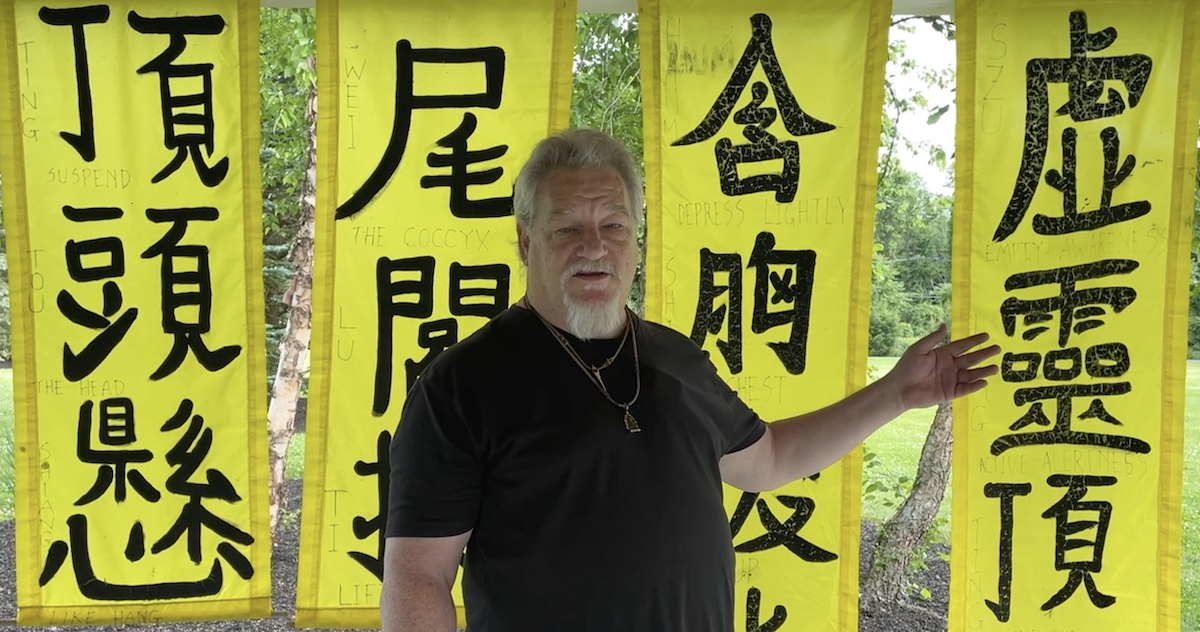
Jim teaches with unusual clarity and patience. The healing side of this work — what these arts can do for ordinary, modern bodies — has been a thread through his teaching for decades, alongside the more athletic and martial work. His mission is to keep these practices alive in a way that is both faithful to the tradition and genuinely useful to students who simply want to feel better.
“Jim teaches the true internal aspects of the arts. Even the simple things suddenly make sense — and start working.”
— Aaron T.
Inside Zhong Ding Healing Arts
Zhong Ding Healing Arts is an on-demand training environment with curated training paths through Qigong, standing practice, forms, breathing techniques, and the underlying principles that make all of them work. With over 150 lessons available immediately and new material added regularly, it’s a practice you can grow with for years — not a 30-day program you finish and forget.
What you get
- Curated paths organized by goal.
- Short, focused lessons (10–20 minutes) you can fit around real life.
- The Eight Brocades, including multiple layers of refinement.
- The Five Animal Frolics with detail and variations.
- A growing library of new material as the curriculum expands.
How it works
- Three membership tiers, monthly or annual.
- Stream from any device. Practice on your own schedule.
- Cancel anytime from your account settings.
- Free introductory course available — no payment required.
A Few Honest Words
These practices are not a treatment for any medical condition, and nothing on this page should be read as medical advice. They are a traditional way of working with your body and mind that many people find useful as part of a wider, well-supported life. If you’re dealing with a serious health issue, please keep working with your doctors and bring this practice in alongside their care.
Frequently Asked Questions
A Different Way to Train
You don’t need to push, punish, or chase. The internal arts have always offered a steady, kinder way of working with the body — one that ages well, fits ordinary life, and meets you where you are.
Start with the free introduction. If it resonates, the full Healing Arts membership is here when you’re ready.